
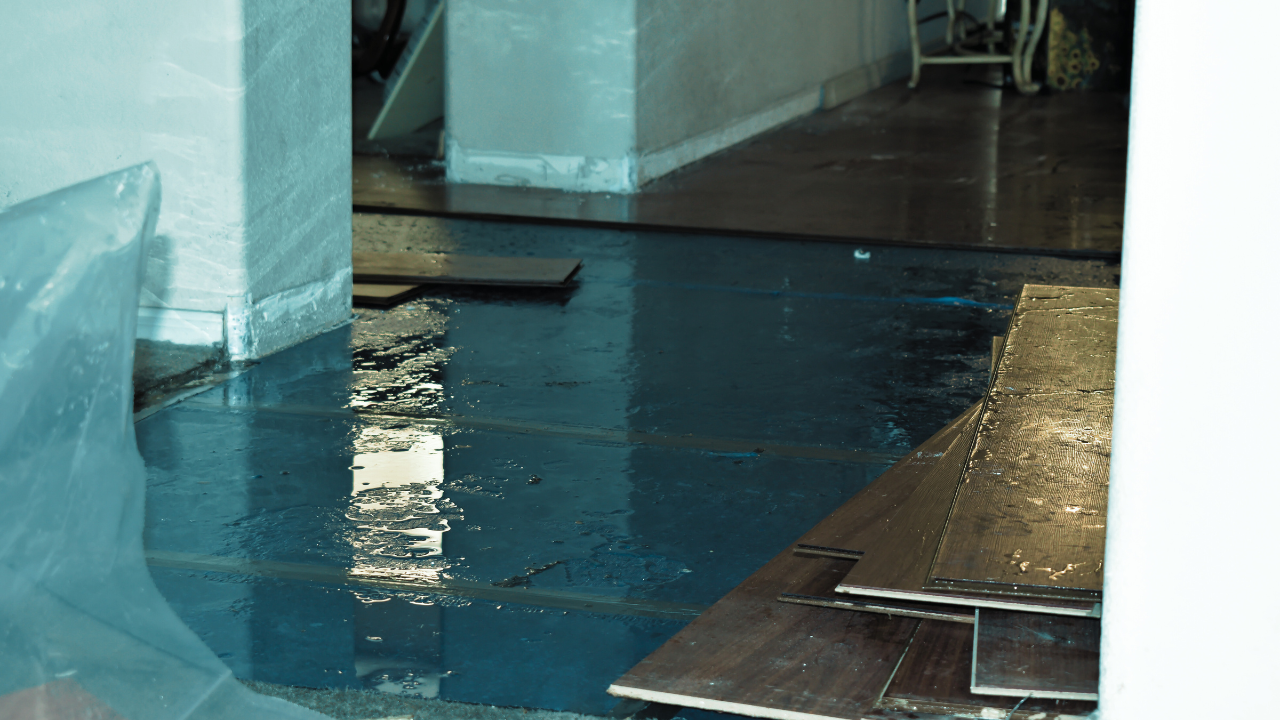
The owners corporation's obligations regarding water damage
Feb 18, 2026Strata disputes involving water damage are increasingly common in New South Wales, particularly as many strata schemes age and infrastructure deteriorates. Section 106 of the Strata Schemes Management Act 2015 (NSW) imposes a strict duty on the Owners Corporation (OC) to maintain and repair common property. But what happens when it’s unclear whether the damaged element is common property? Or when the OC delays repair due to funding issues?
These questions were at the heart of this case between a lot owner in Lane Cove and her Owners Corporation.
Kyriacou v Makis [2025] NSWSC 1010 (8 September 2025)
Factual Background
The appellant, Ms Baluri, owned a townhouse in a 20-lot strata scheme registered in 1976. Her claims arose from three incidents of water ingress, which she said resulted in damage to her flooring, cabinetry, and personal property:
- A sewer pipe leak in the kitchen/dining area in September 2023.
- Stormwater ingress through the side door after heavy rain in October 2023.
- Water leakage from a planter box into upstairs bedrooms.
She alleged that each incident stemmed from a breach of the OC’s statutory duty to maintain and repair common property and sought compensation under section 106(5) of the SSMA.
Her application also included complaints about strata governance, garden maintenance, and allegations of prejudice within the scheme.
What the Tribunal Had to Decide
The Appeal Panel was asked to consider the following key issues:
- Whether the relevant pipes and drainage systems were common property, such that the OC bore responsibility for maintenance;
- Whether the losses suffered were reasonably foreseeable by the OC;
- Whether there were any errors of law or fact in the original Tribunal’s decision;
- Whether new evidence submitted on appeal should be admitted.
Arguments and Evidence
1. Sewer Pipe Leak
The sewer incident occurred just months after the lot owner purchased the property. She submitted that the OC had a history of maintaining the sewer line and that it had failed to act proactively in preventing further issues.
The OC argued:
- The pipe was not common property but located within the lot owner’s rear courtyard.
- Tree roots had been removed in 2022 and the incident in 2023 was not reasonably foreseeable.
- The damage claim was excessive, as it included renovations far beyond the affected area.
The primary Tribunal member accepted the OC's argument and found that the damage was not caused by a failure of the OC’s duty, stating:
“This loss was not reasonably foreseeable … having regard to the [OC’s] recent maintenance works on that precise sewer line.”
Moreover, the only invoice provided by the lot owner was for $82,500, covering a full kitchen renovation. The Tribunal was not persuaded that this entire cost related to the water damage.
“Even if the entire joinery needed to be replaced … the amount was not dissected from the rest of the renovation works.”
2. Front Courtyard Water Ingress
Here, the OC had warned the lot owner not to proceed with re-tiling the courtyard until remedial drainage work was completed. The lot owner went ahead, and the OC later carried out works that required removing some tiles, which the owner had to replace at her cost.
The Tribunal found that the OC had provided reasonable notice and the owner assumed the risk by proceeding with the works prematurely.
3. Planter Box Leak
This was the only area where the lot owner succeeded. The OC was ordered to waterproof the planter box adjacent to the affected bedrooms. This order was not appealed.
4. Garden Maintenance and Governance Issues
These complaints were dismissed due to lack of specificity and insufficient evidence. The Tribunal noted that the alleged issues related to lot property, and that the lot owner was not a committee member. It also found that the OC had complied with noticeboard obligations under Schedule 2 of the SSMA.
Key Legal Principles Considered
The Tribunal revisited foundational case law and statutory principles:
- Section 106(1) imposes a strict duty on the OC to maintain and repair common property.
- To claim compensation under s 106(5), the loss must be reasonably foreseeable.
- Pipes not exclusively servicing one lot may be considered common infrastructure under section 4 of the Strata Schemes Development Act 2015 (NSW).
- Evidence that was reasonably available at the primary hearing will generally not be admitted on appeal.
The Appeal Panel considered whether the sewer pipe in question serviced more than one lot. However, the appellant failed to establish this, and her attempt to introduce a sewerage diagram on appeal was rejected, as it was reasonably available during the original hearing.
The Tribunal’s Reasoning on Appeal
The Appeal Panel dismissed the appeal in its entirety. It found no error of law or fact and no basis to grant leave to appeal. Importantly, the Panel commented on procedural fairness and the limits of self-represented litigants introducing new material on appeal.
In relation to foreseeability, the Panel expressed some doubt about the primary Tribunal’s reasoning but ultimately stated:
“Irrespective of whether the loss was reasonably foreseeable, the lot owner has not made out the OC’s responsibility.”
On the scope of appeal rights, the Panel reinforced that appeals are not an opportunity to re-run the case or present new arguments not raised at first instance.
Lessons for Lot Owners and Owners Corporations
This decision is a strong reminder that:
- Evidence matters. If you want to prove that a pipe is common property, you need clear evidence, ideally including diagrams and expert reports.
- Don’t assume that past conduct creates future obligations. Just because the OC previously paid for repairs doesn’t automatically mean it accepts ongoing responsibility.
- Carefully document your losses. Submitting an all-inclusive renovation invoice won’t suffice; damages must be clearly itemised and attributable.
- Appeals are not second chances. New evidence will only be considered in rare circumstances.
- Communication is critical. Self-represented parties must present their case in a clear, structured, and evidence-backed manner.
Conclusion
Baluri v The Owners - SP No 11258 illustrates the challenges strata lot owners face in navigating legal claims for water damage. The case demonstrates how critical it is to distinguish between common property and lot property, to provide clear evidence of damage and causation, and to follow proper procedure from the outset.
Lot owners should seek legal advice early when dealing with strata disputes, especially when seeking compensation for property damage. A well-prepared case is more likely to succeed than one built on assumptions, generalities or retrospectively compiled materials.
Contact the Shire Legal team if you have any questions.
Stay informed
Sign up to receive regular updates regarding changes to the law, Court decisions and other happenings of interest.
