
When the Neighbour's Hedge Grows Too High: Views, Hedges and the Trees Act
Jul 29, 2026
For many homeowners in the Sutherland Shire, the water view is the whole point – the reason a property was bought and a large part of what it is worth. So it is a genuine grievance when a neighbour’s row of trees, left to grow unchecked, quietly swallows the view of the bay. Can anything be done? And on the other side of the fence: is a homeowner entitled to keep a leafy privacy screen, even if it happens to block a neighbour’s outlook?
New South Wales has a specific piece of legislation for exactly this stand-off, and a recent decision of the Land and Environment Court, Lucas v Buck [2026] NSWLEC 1348, shows how it works, including how finely the outcome can turn on facts as technical as the date an application was filed. It is a useful case for anyone whose views are disappearing behind a hedge and for anyone who owns one.
There is no general “right to a view”
The starting point may surprise people: in New South Wales there is no general legal right to a view, or even to sunlight. You cannot simply demand that a neighbour cut down trees because they spoil your outlook. What the law does provide is a narrow, carefully bounded remedy under Part 2A of the Trees (Disputes Between Neighbours) Act 2006 (NSW) — often called the “high hedges” provisions.
Part 2A lets an owner of land apply to the Land and Environment Court for orders to remedy or prevent a severe obstruction of sunlight to a window or of a view from a dwelling, caused by certain trees on adjoining land. But the jurisdiction is hedged about (so to speak) with strict preconditions. Under section 14A, the provisions apply only to a group of two or more trees that are planted so as to form a hedge and rise to at least 2.5 metres above ground level. Under section 14B, the trees must be on adjoining land. And under section 14E, the Court must be satisfied that the applicant made a reasonable effort to reach agreement with the tree owner, that proper notice was given, and crucially that the obstruction is severe and that the applicant’s interest in having it removed outweighs the benefits the trees provide.
Even when all of that is established, the Court does not simply side with the view. Section 14F sets out a long list of matters the Court must weigh, including the trees’ contribution to privacy, landscaping, the local ecosystem, and protection from sun and wind. The Act is designed to balance competing interests, not to elevate views above everything else.
The facts: a bay view, a Fiddlewood hedge, and a well-timed application
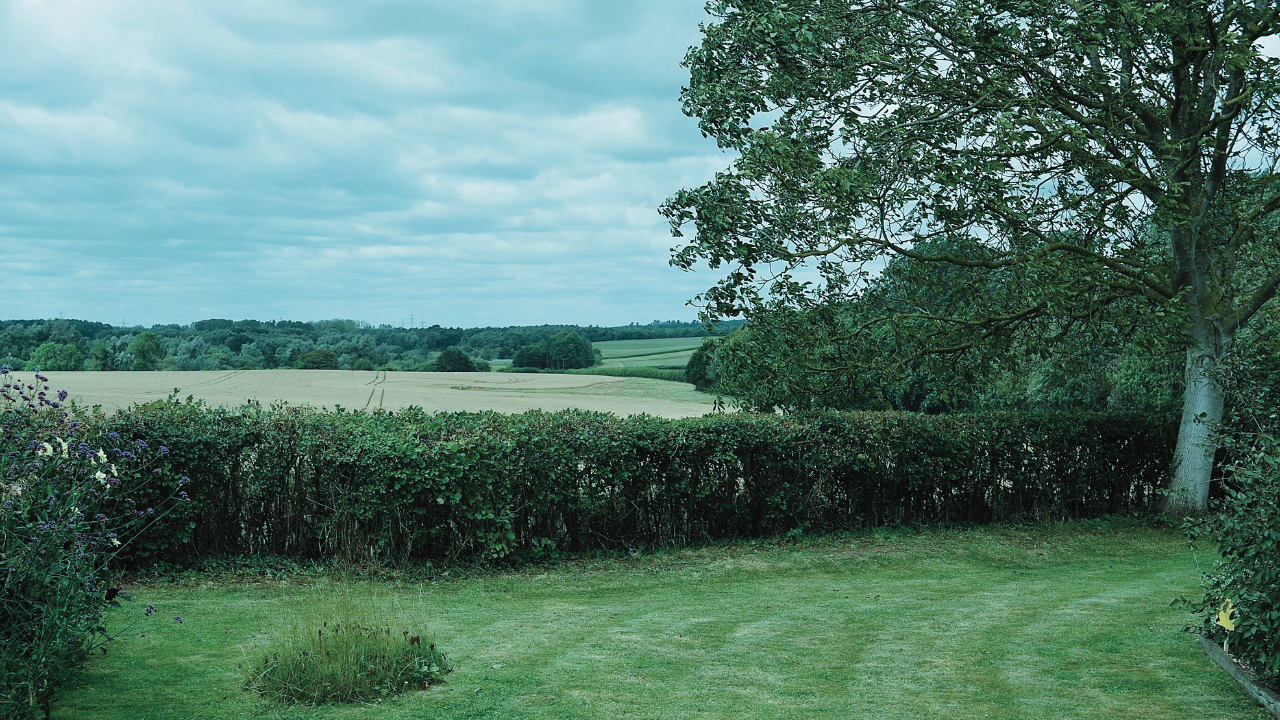
Mr Lucas owned a home in Caringbah South with prized views of Burraneer Bay and bushland. Down the slope, on a battle-axe block, Ms Buck owned a property along whose boundary a previous owner had planted a row of about four Fiddlewood trees (alongside a self-sown Cheese tree). Ms Buck valued the hedge as a privacy screen, shielding her home from being overlooked by the properties above her.
Mr Lucas complained that the hedge, well-maintained at around 2.5 metres by previous owners, had been allowed to grow, and that when it was not kept trimmed, the bay disappeared from view. He applied to the Court seeking orders that the hedge be cut to 2.5 metres twice a year.
The application had several complications. First, Mr Lucas tried to run a combined case covering both his own views and those of his east-side neighbour, Mr Griesshaber, assessing the “cumulative impact” from four separate viewing points. The Court explained that the Trees Act does not work that way: the application had to be confined to obstruction of views from his dwelling.
Second, and this was the real battleground, Ms Buck argued that the trees were not on “adjoining land” at all. By the time of the hearing, Mr Lucas had subdivided his property under a strata plan into two lots, and the lot that actually shared the boundary with Ms Buck’s land (the downslope Lot 2) was no longer his. On that basis, she said, the fundamental section 14B requirement could not be met.
Third, Ms Buck said the hedge was not causing any severe obstruction. She had recently trimmed it to about 3.5 metres and contended the bay was still clearly visible; she also pointed out that part of what blocked the view was her neighbour’s washing line, not her trees.
Finally, Ms Buck disputed that Mr Lucas had made any real effort to reach agreement. She said she had never spoken to him about the hedge, was unaware it affected his views, and first learned of his concerns when the filed application landed in her letterbox. The “more than 12 months of discussion” Mr Lucas referred to had in fact been between Ms Buck and the other neighbour, Mr Griesshaber.
The Court’s decision: jurisdiction saved by timing, orders made on the Steber principle
Acting Commissioner Douglas worked methodically through each requirement, and the case turned on some fine points.
On whether the trees formed a hedge, the Court was satisfied: the Fiddlewoods had been planted as a row and exceeded 2.5 metres, so section 14A was engaged (the self-sown Cheese tree was treated as not part of the hedge).
On adjoining land, the Court agreed with Ms Buck that, at the date of the hearing, the trees were no longer on land adjoining Mr Lucas’s retained lot; the strata subdivision had been registered on 29 October 2025. But jurisdiction under the Trees Act is assessed at the date the application was made. Mr Lucas had lodged his application on 26 September 2025 before the subdivision was registered when his property still shared a common boundary with Ms Buck’s land. Because the trees were on adjoining land on that date, section 14B was satisfied. As the Commissioner candidly put it, through “a combination of good luck and good timing”, Mr Lucas scraped over the jurisdictional line.
On the reasonable effort to reach agreement, the Court accepted that Mr Lucas had not really engaged with Ms Buck directly and that her sense of grievance about being blindsided was understandable. But the law here is forgiving. Following the leading decision of Robson v Leischke, the Court noted that the Act does not prescribe how an applicant must try to reach agreement and that the effort can be made at any time up until the Court determines the application. The requirement is deliberately “less demanding” than in other statutory schemes. On that generous standard, section 14E(1)(a) was satisfied.
The hardest question was whether the obstruction was severe. Because Ms Buck had trimmed the hedge to about 3.5 metres shortly before the hearing, the obstruction at that moment was only minor. Ordinarily, that would be fatal, the Court assesses severity at the hearing. But the Commissioner applied the reasoning from Steber v Job, a case dealing with exactly this situation: a fast-growing hedge that had severely obstructed a view in the past and, without ongoing intervention, would do so again. Fiddlewood trees grow rapidly into a dense screen, and Ms Buck conceded the hedge had recently reached about 8 metres. The Court was satisfied that at that height (and even lower) the obstruction of the bay view would be severe and that the pattern of neglect meant it was likely to recur. That was enough to engage section 14E(2)(a).
Finally, the Court balanced the competing interests under section 14F. It gave real weight to Ms Buck’s privacy and to the hedge’s contribution to her landscaping and protection from sun and wind, as well as its modest ecological value. But it found that a managed height struck a fair balance. The Fiddlewoods were resilient and would tolerate regular pruning (provided the pest issues were monitored).
The orders reflect that balance. Ms Buck must, at her own expense, prune the hedge to no more than three metres above the raised garden bed soil level – first within 45 days, and then on a recurring schedule (each June and December, before Christmas) to keep it in check. Mr Lucas must provide access for the work on 72 hours’ notice, and the pruning must comply with the relevant Safe Work Australia guidance. Notably, the Court framed the three-metre height as a compromise that preserved a usable privacy screen for Ms Buck while restoring Mr Lucas’s view and aligned the orders with those made in the companion case involving the other neighbour.
The practical lessons
Lucas v Buck is a short judgment with a surprising number of lessons for neighbours on both sides of a hedge.
There is no automatic right to a view but there is a remedy for a severe hedge obstruction. If a planted hedge of two or more trees over 2.5 metres on adjoining land is severely blocking your view, Part 2A of the Trees Act may help. General leafiness, single trees, or a merely annoying obstruction will not qualify.
“Severe” is a high bar but past and future severity can count. A tree owner cannot necessarily defeat a claim with a last-minute trim. Where a fast-growing hedge has caused severe obstruction before and will again without maintenance, the Steber principle allows the Court to make ongoing pruning orders. This is particularly relevant for vigorous species like Fiddlewood.
Timing and title matter enormously. The whole case hinged on the fact that the trees were on adjoining land when the application was filed, even though a later subdivision changed that. If you are contemplating an application or a subdivision or a purchase, the precise configuration of boundaries and the sequence of events can be decisive. Get advice before you act, not after.
Frame the application correctly. Mr Lucas’s attempt to bundle in his neighbour’s views and multiple viewing points was misconceived. The remedy is about obstruction of views from your own dwelling. A poorly framed application wastes time and can undermine credibility.
Try to resolve it first even though the law is lenient. While the Court accepted a fairly thin “effort to reach agreement” here, that is not a licence to skip the conversation. A neighbour who is genuinely unaware of the problem may simply trim the hedge if asked. Litigation in the Land and Environment Court is a last resort, not a first move, and a documented attempt to reach agreement protects your position.
For hedge owners: maintain, and know your privacy still counts. Ms Buck’s privacy was expressly weighed and protected, she kept a three-metre screen. But allowing a hedge to run to eight metres invited the dispute. Regular maintenance at a sensible height is the best way to keep both your privacy and the peace.
Contact the Shire Legal team if you have any questions.
Stay informed
Sign up to receive regular updates regarding changes to the law, Court decisions and other happenings of interest.
